
Artist profile · November 2026 edition
About Crowder
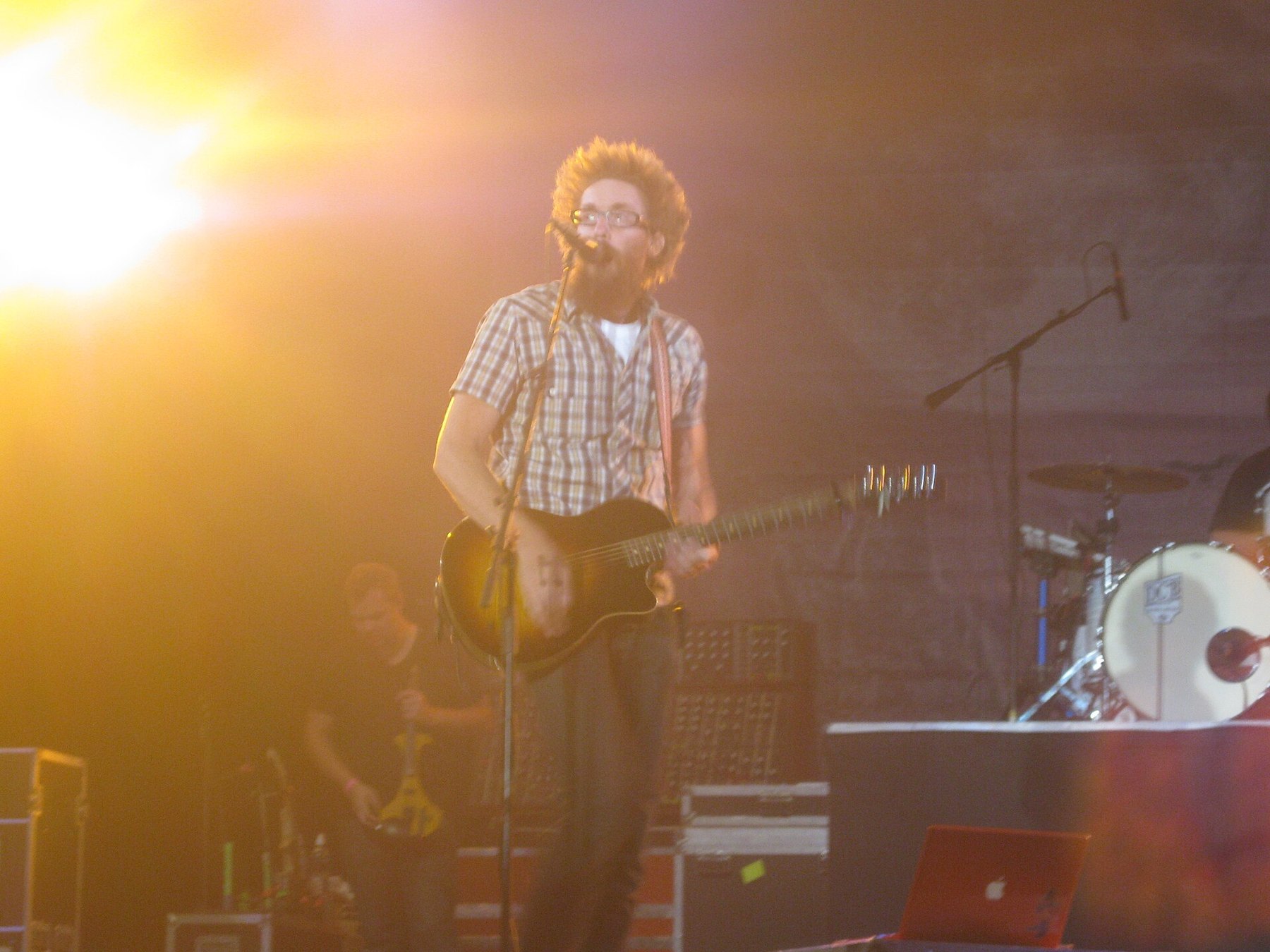
David Crowder is difficult to mistake for anyone else. His beard, unconventional appearance and rough-edged voice are immediately recognisable, but his musical curiosity matters more. Working under the name Crowder, he combines traditional gospel influences with folk, country, rock and electronic production. A song may begin as though it belongs at an acoustic gathering and finish with a beat that would fit a contemporary pop mix. This unpredictability keeps his catalogue lively. Crowder seems unconcerned with whether every song fits neatly into one familiar Christian genre.
Before becoming known as a solo performer under his surname, he led the David Crowder Band. That project grew into an influential name in modern Christian worship. The group became known for pairing explicit worship lyrics with experimental musical arrangements. When the band came to an end, Crowder gained the freedom to explore his interest in different American musical styles even more deeply. Rather than creating a straightforward extension of the old formula, he developed a solo sound in which the spirit of old church songs meets modern studio technology.
Albums such as ‘Neon Steeple’, ‘American Prodigal’ and ‘I Know a Ghost’ show how broad his musical territory is. Crowder often uses a heavy, almost stomping bass rhythm, combined with banjo-like textures, guitars, handclaps and electronic effects. On paper, this may sound like an unlikely mixture, but in practice it produces a surprisingly coherent sound. That is because his voice and imagery form a common thread. He frequently sings about grace, deliverance, redemption and the joy of a life transformed by God.
‘Good God Almighty’ became one of his signature energetic songs. The track shows why his music works on radio: the chorus is direct, the rhythm moves briskly and the singer sounds as though he could not perform the song with anything less than full conviction. At the same time, Crowder makes room for darker or more reflective material. His catalogue is therefore not limited to celebratory exclamations. Some songs reveal how closely hope and struggle can exist together. The rough edges prevent his optimism from becoming uniformly smooth and predictable.
The 2024 release ‘The Exile’ again demonstrated his interest in musical contrasts. Songs such as ‘Grave Robber’ and ‘Somebody Prayed’ attracted attention, with contributions from artists including Zach Williams and Dylan Scott. The album developed his established style without simply recycling every earlier idea. Releases such as ‘The Rock’ and ‘Still’ followed in 2025. In 2026, new material included ‘There Is Power’ and ‘Never Gonna Die (July!)’. Crowder thus remained active with new releases, despite having a long and varied catalogue already behind him.
What makes his work interesting is that traditional beliefs do not automatically lead to a traditional sound. Crowder uses images of sin, grace, death and resurrection that are deeply rooted in Christian tradition. Musically, however, he often looks for tension and surprise. His strongest songs therefore feel old and new at the same time. A listener who grew up with hymns may recognise a familiar melodic or lyrical element; a younger listener may be drawn to the same track through its beat or production.
This approach also has limitations. Not every musical combination is equally successful, and sometimes an experimental arrangement demands a great deal of attention before revealing the heart of the song. Crowder deserves more than praise simply for daring to sound different. The question remains whether a track is also a good composition beneath its surprising surface. At his best, it clearly is. An unusual blend of instruments then becomes not an end in itself but a means of giving the subject additional character.
Crowder’s voice contributes greatly to his idiosyncratic sound. It is not a flawless, polished pop voice. It has a gritty quality that suits lyrics about brokenness, grace and new beginnings. The sound takes on particular meaning when he sings simple words. At times, it seems as though a lyric has passed through hard-won life experience before being spoken. We should not project that literally onto every track, but as a musical effect it works powerfully. His voice reduces the distance between artist and listener, even when the production is conspicuously experimental or large in scale.
Another strength lies in how he handles musical traditions. Gospel, bluegrass, folk and electronic pop are not museum pieces that he simply places alongside one another. He uses them as raw material to build something new. The result can sound unexpectedly humorous, with rhythms that invite movement even as the lyrics address serious subjects. This deserves more than admiration for originality. What matters most is whether the chosen combination genuinely adds something. When Crowder gets that right, he creates a song that belongs fully to no existing category and stays in the memory precisely because of it.
For a station such as Revival FM, Crowder provides an interesting change of colour. His music sits somewhere between the broad world of Christian hits, gospel and alternative pop-rock. A Crowder track can therefore open up the programming and show listeners that the Christian music scene is not built around one standard production style. The energy of his rhythmic songs works well alongside modern pop, while his acoustic and gospel-influenced material offers room for contrast.
Ultimately, Crowder’s strength lies in his independence from stylistic expectations. Over the years, he has shown that he takes the language of faith seriously without making the music predictable. His future releases will be interesting chiefly because of the musical traditions he may bring together next. An artist who continues to follow his own creative curiosity always runs a greater risk of a less successful experiment. But when it works, the result has more staying power than a song written solely to fit an established format.